

How to Fight Copyright Infringement from Fake Product Listings
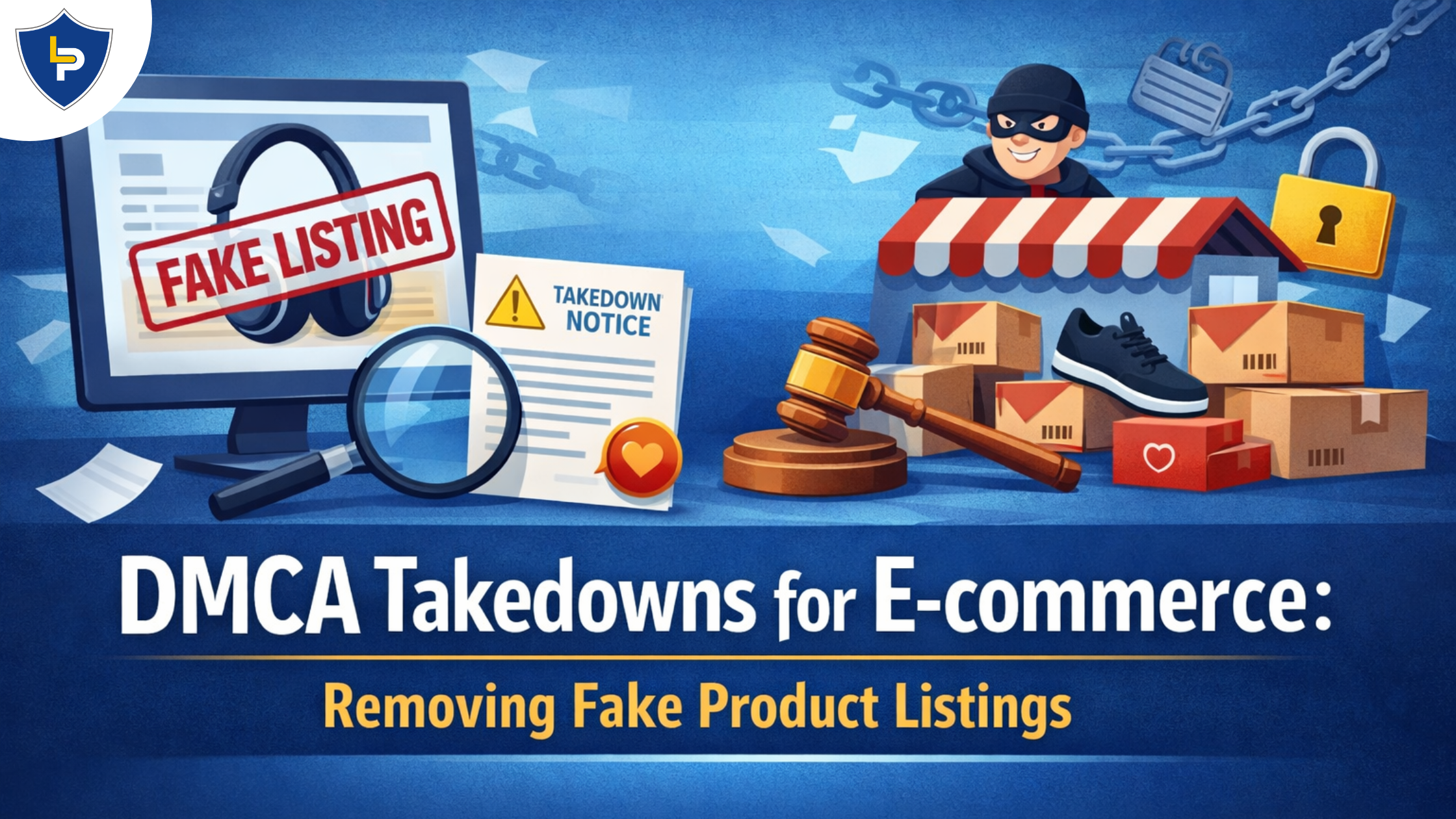
Fake product listings are a growing problem for e-commerce brands, manufacturers, and online sellers. When someone copies your product photos, descriptions, graphics, or other original materials and uses them in an unauthorized listing, it can become a case of Copyright Infringement. Fake and counterfeit listings can also confuse customers, damage your reputation, and divert sales from your legitimate business.
The good news is that businesses can take several steps to identify and remove unauthorized listings from online marketplaces.
What Are Fake Product Listings?
A fake product listing is an unauthorized or misleading product listing published by someone who does not have the right to sell, promote, or represent the product.
These listings may involve:
- Counterfeit or fake products
- Unauthorized sellers
- Stolen product images
- Copied product descriptions
- Unauthorized use of logos or brand assets
- Misleading product information
- Duplicate listings created to divert customers
- Products falsely presented as genuine or officially authorized
Fake listings can appear on major marketplaces, independent e-commerce websites, social media shops, and other online platforms.
Why Fake Product Listings Are a Serious Problem
A fake listing is not simply another seller competing with your business. It can directly affect your revenue, customer trust, and brand reputation.
1. Lost Sales
Customers who purchase from an unauthorized seller may otherwise have purchased from your official store or authorized distributor.
2. Customer Confusion
When another seller uses your product images, descriptions, or branding, customers may believe that the listing is connected to your business.
3. Brand Reputation Damage
If customers receive poor-quality counterfeit products, they may associate that experience with your brand—even when you had nothing to do with the sale.
4. Unauthorized Use of Creative Assets
Product photography, graphics, videos, written descriptions, and marketing materials can represent valuable creative assets. Copying these materials without permission may constitute Copyright Infringement.
5. Revenue and Business Impact
A large number of unauthorized listings can reduce legitimate sales while increasing the amount of time your team spends monitoring and reporting violations.
Copyright Infringement vs. Counterfeit Product Infringement
It is important to understand that not every fake product listing is automatically a copyright issue.
Copyright protection generally applies to original creative works such as:
- Product photographs
- Product videos
- Original written descriptions
- Graphics and promotional materials
- Original illustrations and designs
Trademark protection, on the other hand, generally covers brand identifiers such as:
- Brand names
- Logos
- Slogans
- Distinctive marks
A counterfeit product may involve trademark infringement, copyright infringement, or other intellectual property violations depending on how the listing and product are being used.
For this reason, businesses should identify the specific rights being violated before submitting a complaint.
How to Remove Fake Product Listings
Step 1: Identify the Fake Listing
Start by locating the unauthorized listing.
Search for:
- Your brand name
- Product names
- Unique product descriptions
- Product image matches
- Unauthorized seller names
- Your copyrighted photographs
- Your logo or other brand assets
Regular monitoring can help you identify fake listings before they cause significant damage.
Step 2: Collect Evidence
Before reporting the listing, document the infringement.
Save:
- Infringing product URL
- Screenshots of the listing
- Seller profile information
- Screenshots of copied images
- Copies of copied product descriptions
- Your original product URL
- Original images and files
- Publication dates or other ownership evidence
Clear evidence makes it easier for a marketplace or service provider to understand the complaint.
Step 3: Compare the Original and Infringing Content
Show exactly what has been copied.
For example:
Original: Your official product page contains an original product photograph.
Infringing: Another seller uses the same photograph to promote a different or counterfeit product.
You can also compare copied descriptions, graphics, videos, and other creative materials.
This comparison can help establish ownership and demonstrate unauthorized use.
Step 4: Report the Listing to the Marketplace
Most major marketplaces have intellectual property reporting mechanisms.
Depending on the nature of the violation, you may be able to report:
- Copyright violations
- Trademark violations
- Counterfeit products
- Unauthorized use of brand assets
- Misleading listings
- Unauthorized sellers
Choose the complaint type that accurately matches the violation and provide complete supporting information.
Step 5: Submit a DMCA Takedown Notice When Copyrighted Material Is Involved
If the fake listing uses your copyrighted photographs, product descriptions, graphics, videos, or other protected creative content without authorization, a DMCA Takedown Notice may be an appropriate enforcement option where the relevant legal framework and platform process apply.
A properly prepared notice should clearly identify:
- The copyrighted work
- Your ownership or authorization to act
- The infringing material
- The relevant URLs
- Your contact information
- The required legal statements and certifications
The platform or service provider can then review the complaint under its applicable procedures.
Step 6: Follow Up
Submitting a complaint is not always the end of the process.
Track:
- Complaint submission date
- Case or reference number
- Infringing URLs
- Platform responses
- Removal status
- Reappearing listings
If the seller creates new listings after removal, document those as well. Repeated infringement may require an ongoing enforcement strategy.
What If the Same Seller Keeps Reappearing?
Some sellers may create new listings, accounts, or URLs after an earlier listing is removed.
In such situations, businesses should consider implementing continuous monitoring.
A repeat-infringer strategy can include:
- Monitoring marketplaces regularly.
- Maintaining a database of known infringing sellers.
- Recording previously reported URLs.
- Collecting evidence of repeated violations.
- Reporting new infringements promptly.
- Escalating persistent violations through the marketplace’s applicable channels.
The goal is not just to remove one listing but to reduce repeated misuse of your intellectual property.
How to Prevent Fake Product Listings
You cannot completely prevent unauthorized sellers from appearing online, but you can make detection and enforcement easier.
Monitor Your Brand Online
Regularly search marketplaces for your brand, product names, and distinctive product images.
Protect Your Product Images
Use high-quality original images and consider appropriate watermarking or other asset-management practices.
Maintain Ownership Records
Keep original photographs, design files, product descriptions, publication records, and other documentation that can help demonstrate ownership.
Register Intellectual Property Where Appropriate
Depending on your business and jurisdiction, copyright and trademark registration can strengthen your intellectual property protection and enforcement strategy.
Build an Authorized Seller Network
Clearly identify authorized distributors and sellers so customers can distinguish legitimate listings from unauthorized ones.
When Should You Get Professional Help?
Managing one or two unauthorized listings may be straightforward. However, large brands can face hundreds or thousands of infringements across multiple marketplaces.
Professional assistance can be useful when:
- Multiple marketplaces are involved
- Infringement is happening repeatedly
- Sellers are using your copyrighted images or content
- Counterfeit listings are affecting sales
- Your brand is being impersonated
- Manual monitoring is taking too much time
- Previous complaints have not resulted in removal
A professional enforcement service can help identify infringements, organize evidence, prepare appropriate notices, and manage takedown processes.
Protect Your Brand From Fake Product Listings
Fake product listings can cost businesses more than lost sales. They can affect customer trust, brand reputation, and the value of your intellectual property.
If an unauthorized seller is using your original product images, descriptions, videos, or other copyrighted materials, taking prompt action can help limit the impact of Copyright Infringement.
At LexDMCA, we help businesses identify and address unauthorized content across e-commerce platforms and other online channels. Our services include DMCA takedown support for e-commerce content, including platforms such as Amazon, Alibaba, Flipkart, and Meesho.
Don’t wait until fake listings become a bigger problem. Monitor your content, document infringements, and take action to protect your digital assets.


 +1 888 890 6411