

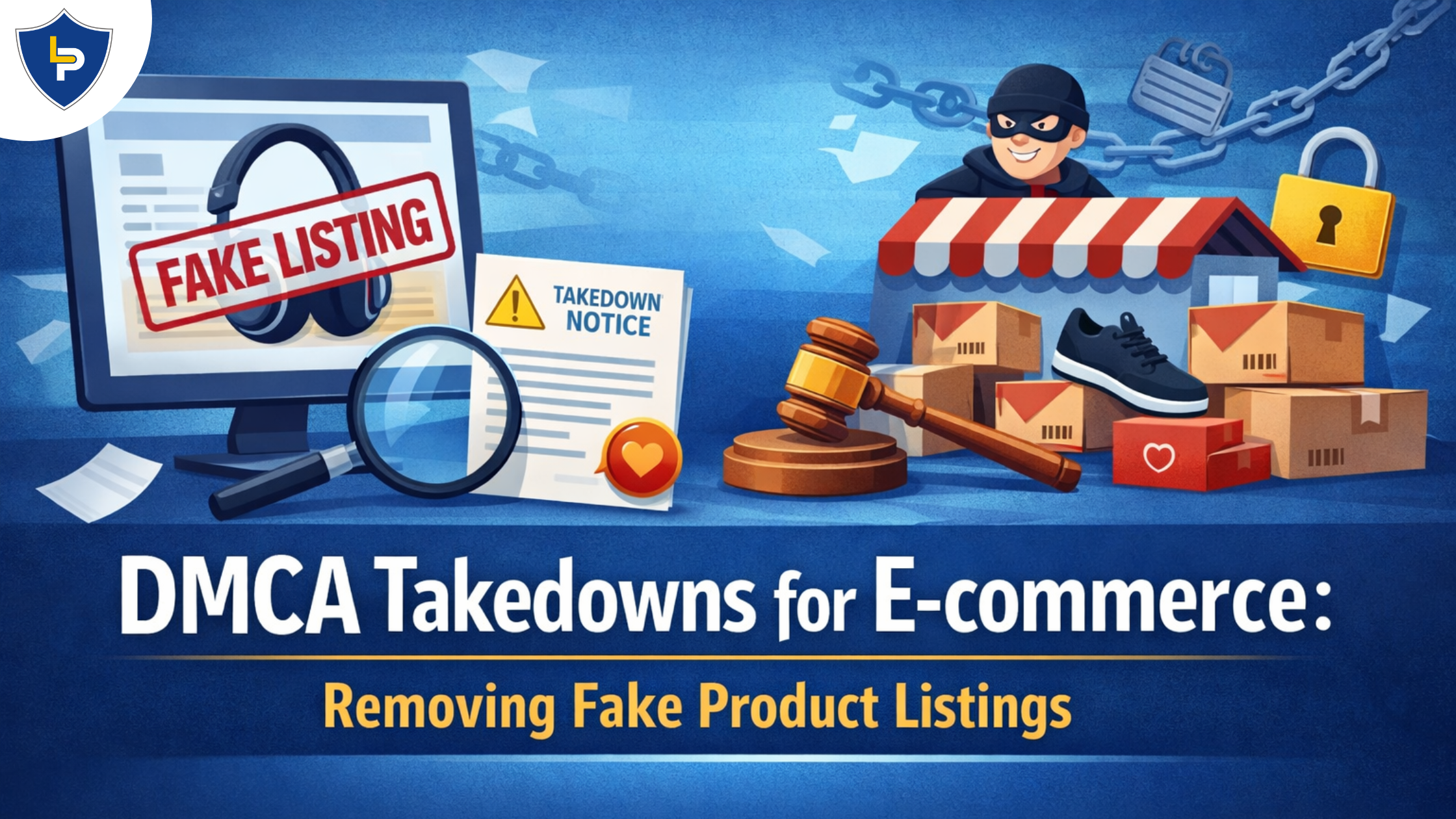
DMCA Takedown for Google Search: Remove Pirated Links from SERP
In today’s digital-first world, your content can be copied, republished, and distributed without your permission within minutes. Whether you’re a creator, business owner, or brand, seeing pirated links ranking on Google Search can directly impact your traffic, revenue, and reputation.
This is where a DMCA Takedown Notice becomes a powerful tool.
In this guide, we’ll walk you through how to remove pirated links from Google Search results (SERP) using DMCA, why it matters, and how to do it effectively.
A DMCA Takedown Notice is a legal request submitted under the Digital Millennium Copyright Act (DMCA), asking platforms like Google to remove content that infringes on your copyright.
When applied to Google Search, it allows you to:
- Remove infringing URLs from search results
- Reduce visibility of pirated content
- Protect your intellectual property
Why Remove Pirated Links from Google SERP?
Even if you cannot immediately take down the infringing website, removing it from Google Search significantly reduces its reach.
Key benefits:
- Protects traffic: Prevents users from landing on pirated versions
- Safeguards revenue: Especially important for digital products, blogs, and media
- Maintains SEO integrity: Stops duplicate content from competing with your original page
- Brand protection: Avoids association with low-quality or malicious sites
When Should You File a DMCA Takedown?
You should submit a DMCA Takedown Notice when:
- Your blog, article, or website content is copied
- Paid content is distributed for free
- Images, videos, or PDFs are reused without permission
- Entire pages are scraped and indexed
How to Remove Pirated Links from Google Search
Step 1: Identify Infringing URLs
Search your content on Google and collect all URLs that:
- Copy your content
- Host pirated versions
- Rank for your branded or original keywords
Step 2: Gather Proof of Ownership
You’ll need:
- Original content URL
- Publication date (if available)
- Screenshots or evidence of copying
Step 3: Submit a DMCA Takedown Notice to Google
Go to Google’s Legal Removal Request form and provide:
- Your contact details
- URLs of infringing content
- URL of original content
- Statement of ownership
- Declaration under penalty of perjury
Step 4: Monitor Status
Once submitted:
- Google reviews your request
- If valid, URLs are removed from search results
- Processing typically takes a few days
Step 5: Repeat & Scale
Piracy is ongoing. You should:
- Regularly monitor search results
- Submit bulk DMCA notices
- Automate tracking if possible
What Happens After Removal?
Once Google accepts your DMCA Takedown Notice:
- The infringing URLs are de-indexed from search results
- Users can no longer easily discover pirated content
- A notice may appear in SERP indicating removal due to copyright
However, note:
- The content may still exist on the website
- For full removal, you may also need to contact hosting providers
Common Mistakes to Avoid
- Submitting incomplete or incorrect URLs
- Not providing proof of ownership
- Filing against non-infringing content
- Ignoring repeat offenders
Final Thoughts
A DMCA Takedown Notice is one of the most effective ways to protect your content from piracy—especially on Google Search, where visibility equals value.
By removing pirated links from SERP, you take back control of your content, traffic, and brand.
If you’re dealing with large-scale infringement or need faster results, professional DMCA services can help streamline the entire process.



 +1 888 890 6411